Bangash Pashtun tribe Y-DNA
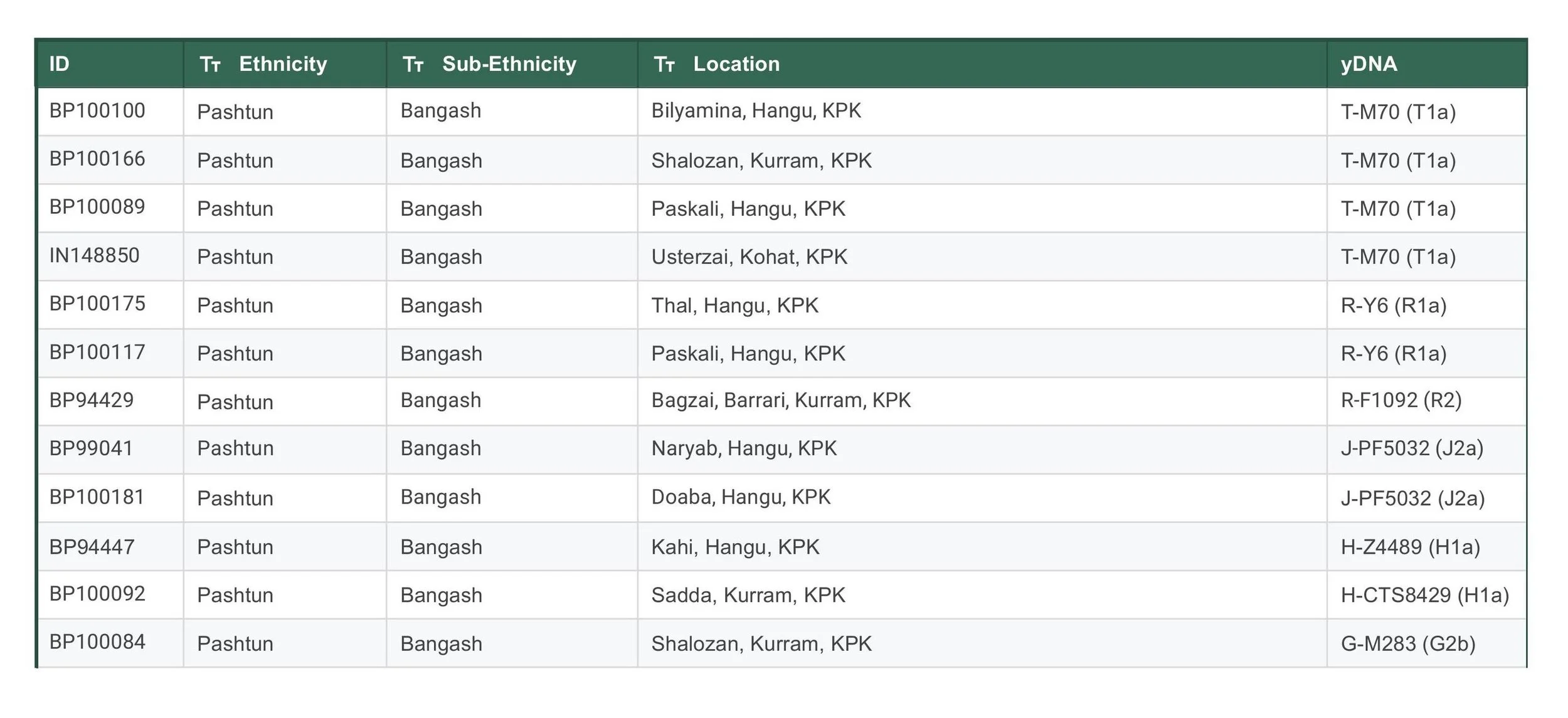
Our Afghan–Pakistan DNA Project has collected nine samples from the Bangash tribe of Pashtuns in the central KPK districts of Kurram, Hangu, and Kohat.
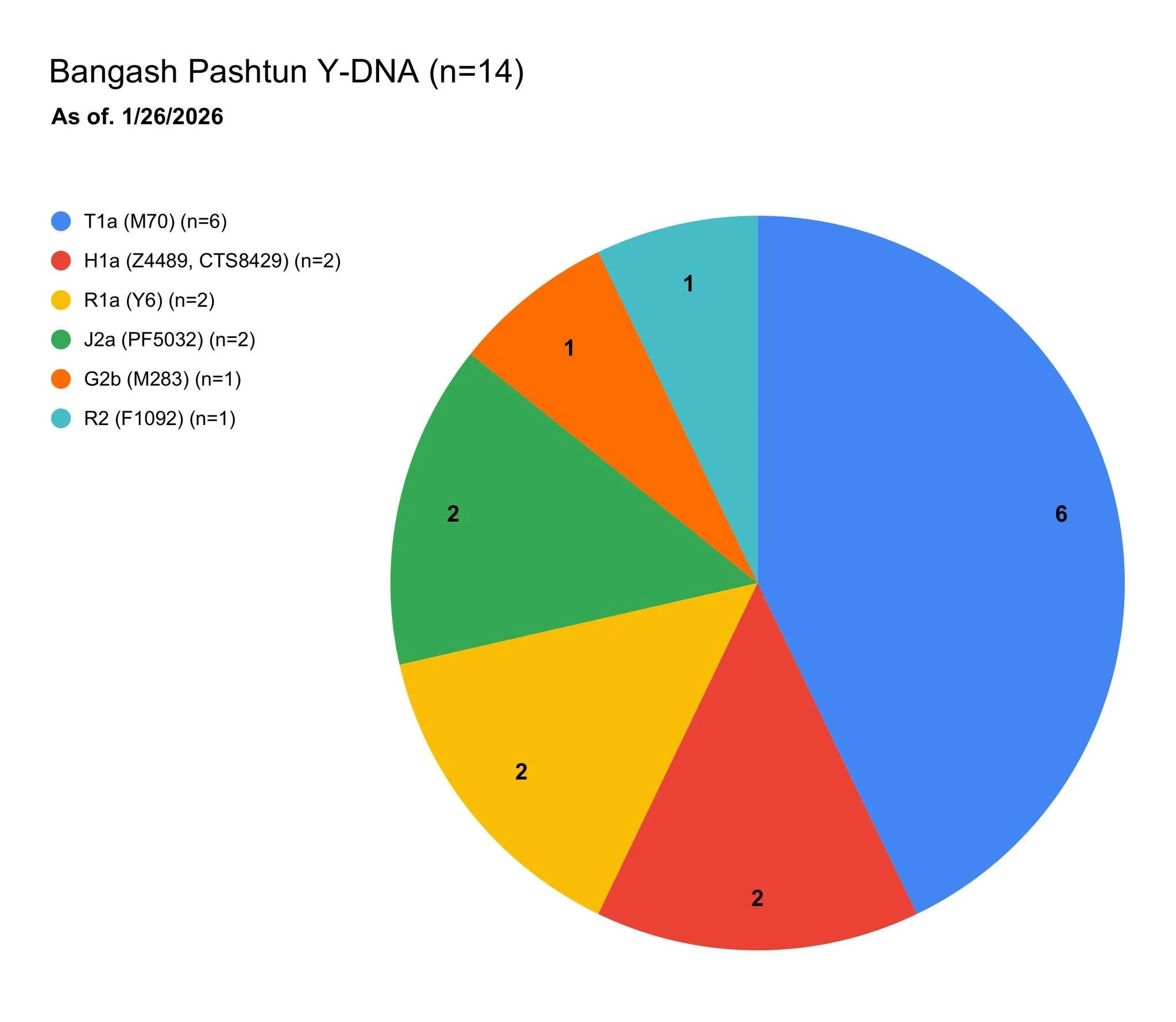
Combined with three Bangash samples collected last year and two Bangash Y-DNA samples from private testers, this brings the total to 14 samples, making the Bangash tribe one of the best-tested tribes in the central KPK.
Unlike other Karlani tribes, the Bangash do not show G2b as their primary Y-DNA haplogroup. Instead, a significant proportion of sampled individuals belong to T1a-M70, which has also been previously detected among other Pashtun tribes of central KPK, such as the Turi and Orakzai.
The presence of T1a in other Karlani tribes of the region and the small G2b presence in Bangash suggests that T1a has an older presence in the Karlani sphere. It could have been one of the lineages of the Karlani homeland that did not die out during the major G2b demographic expansions.
The non-G2b dominated Y-DNA profile of Bangash could suggest that the Bangash tribe formed after the major G2b bottleneck events. They may have an independent formation history that happened after the Karlani expansion.
A fuller understanding of T1a’s role within the Karlani sphere will require building Y-DNA profiles of other Karlani tribes in which T1a has observed and obtaining Big Y tests for them to see their internal branching patterns and compare their divergence times against the well-established Karlani G2b tree. Further testing of the Bangash G2b will also help in this regard.
A Big Y order has been placed for one of the Bangash T1a samples.